The cheapest time to discover that a business idea does not work is before you build the full version of it.
A logo, website, software subscription, inventory order, course, LLC filing, and new laptop can make an idea look serious without proving that anyone wants the result. The first test should answer a smaller question: will a real person take a real action for this offer?
This is a practical validation process for a small operator. It is not a promise that a test predicts future success.
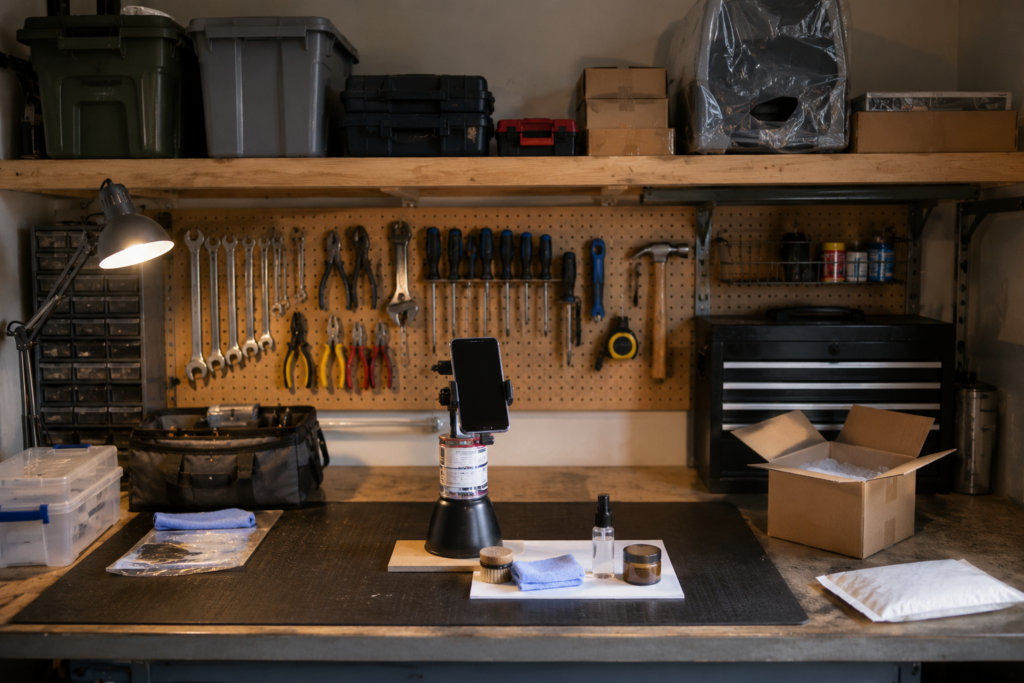
The Test Before the Build
Start by writing the idea in one sentence:
I help [specific customer] solve [specific problem] by providing [specific result].
If that sentence cannot be made concrete, buying more tools will not fix it.
Start With the Problem, Not the Brand
Talk to the people who might actually buy. Look for evidence that the problem exists now, costs something, wastes time, creates risk, or is annoying enough that someone already tries to solve it.
Compliments are weak evidence. “That sounds cool” is not the same as booking a call, requesting a quote, joining a waitlist, paying a deposit, buying a small first version, or referring someone who needs the work.
Use What You Already Have
For the first test, use existing equipment and the lightest credible sales path available. That might be a direct conversation, a simple quote, a marketplace listing, a one-page site, a basic form, or a short email sequence.
Do not build a complicated website before the offer needs one. If the test earns evidence and a site becomes useful, use How to Set Up a Basic Small Business Website.
Set a Cost-of-Being-Wrong Limit
Decide in advance how much money and time you are willing to lose learning that the idea is wrong. That turns startup spending into a controlled experiment instead of a slow leak.
| Before Testing | Set the Limit |
|---|---|
| Cash | Maximum test spend before new evidence is required. |
| Time | Hours or weeks before reviewing the result. |
| Inventory | Smallest quantity that can prove the process. |
| Software | Free/basic tier unless a paid feature is required for the test. |
| Marketing | Small channel-specific test, not a broad campaign. |
Ask for a Real Action
A useful test creates some friction. Ask the prospect to do something that matters: schedule, pay, commit, submit details, approve a quote, or take the next concrete step.
If nobody acts, do not immediately assume the idea is dead. Check the offer, audience, price, channel, and message separately. Small Business Marketing covers the practical job of getting the right offer in front of the right people.
Run the Smallest Useful Version
The first version should prove the hard part of the business, not simulate success around it. If the business depends on delivering a service, deliver the service manually. If it depends on sourcing and shipping a product, prove the sourcing and shipping. If it depends on recurring demand, one friendly customer is not enough.
Test Price Before You Optimize Price
A price is part of the offer. Test whether a real customer will accept it before building an elaborate pricing model around imaginary demand.
Do not race to the bottom just to force a first sale. A price that cannot cover the work teaches the wrong lesson. Once there is evidence, use How to Raise Small Business Prices Without Guessing to evaluate the economics.
Measure Fit as Well as Money
A test can generate revenue and still be a bad business for the operator. Track the ugly parts too:
- Unpaid setup and communication time.
- Travel, supplies, returns, platform fees, and payment costs.
- Scheduling friction.
- Customer acquisition effort.
- Rework and complaints.
- Whether the work can be repeated without wrecking the rest of the week.
Buy Only After a Real Bottleneck Appears
Tools should remove a demonstrated constraint. If the test shows that scheduling is breaking, buy scheduling help. If invoicing is the problem, fix invoicing. If the website is not the bottleneck, a redesign is not progress.
The Tools page uses the same rule: match the tool to a job that actually exists.
A Simple 30-Day Test
- Define the customer and problem.
- Write the smallest sellable offer.
- Set the money and time limit.
- Choose one or two realistic channels.
- Ask for a real action.
- Deliver manually where practical.
- Track revenue, direct costs, time, and friction.
- Review what failed before buying anything else.
Know What Would Make You Stop
Set a stop condition before sunk cost starts doing the thinking. Examples include no qualified interest after a defined outreach test, margins that stay negative at a realistic price, delivery that cannot fit available time, or a legal/insurance requirement that makes the idea unattractive.
If the idea survives the test and starts behaving like a repeatable operation, review when to formalize the small business.
Bottom Line
Do not spend money to prove you are serious. Spend small amounts to remove specific uncertainty.
Define the problem, ask for a real action, deliver the smallest useful version, record the economics, and buy more structure only after the evidence earns it. That is the same operating logic used in the ABC-eFlow Method.